The Iberian Blackout's Financial Fallout: EUR 400M-1.6B and What DORA Requires
Five Seconds That Rewrote the Resilience Playbook
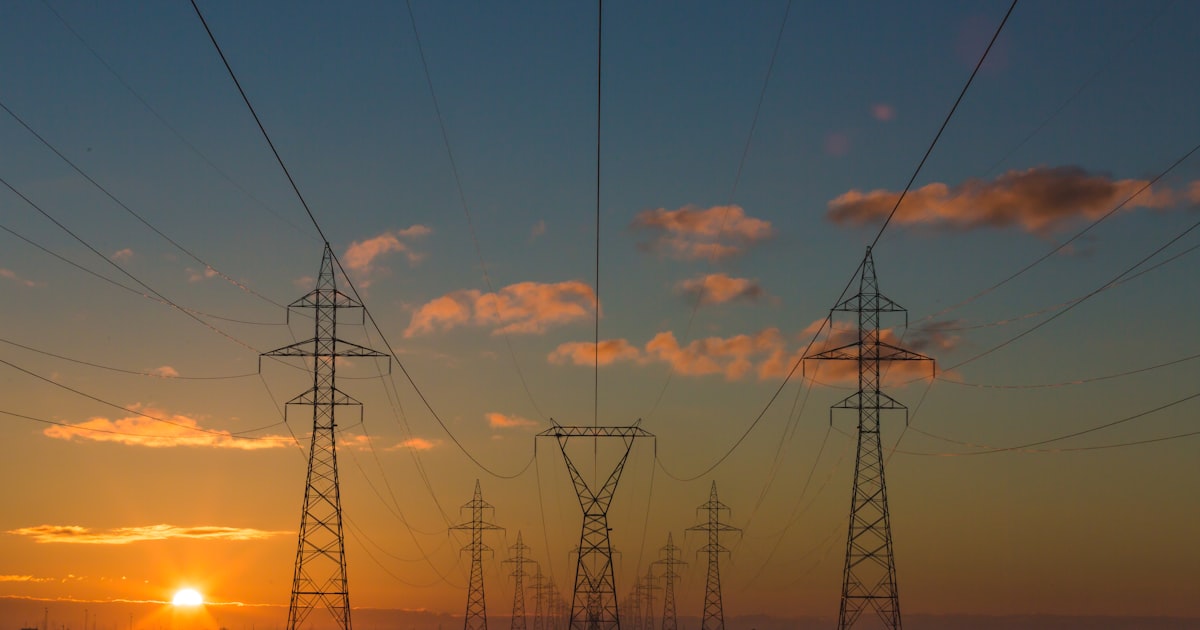
At 12:33 PM local time on April 28, 2025, approximately 15 gigawatts of electrical generating capacity disconnected from the Iberian grid in approximately five seconds. The cascading failure — later attributed to a combination of grid instability factors under investigation by ENTSO-E — plunged 60 million people across Spain and Portugal into a simultaneous blackout. Traffic lights failed. Metro systems stopped. Hospitals switched to backup generators. And across the Iberian Peninsula, the digital financial infrastructure that processes millions of daily transactions went dark.
The blackout lasted hours for most areas, with full power restoration extending into the following morning for some regions. But for the financial sector, the impact was measurable within minutes and quantifiable within hours. The European Central Bank's subsequent analysis, published in its Economic Bulletin, documented the financial fallout with unusual specificity — and the numbers reframe every assumption about operational resilience planning in European financial services.
The Financial Impact: By the Numbers
The ECB's data on the blackout's financial impact is the most granular public dataset available on a real-world infrastructure disruption affecting the European payment system:
| Impact Metric | Measurement | Source |
|---|---|---|
| Power capacity disconnected | 15 GW in ~5 seconds | ENTSO-E preliminary report |
| Population affected | ~60 million (Spain + Portugal) | Government communications |
| Card payment volume decline | 41-42% in affected areas | ECB Economic Bulletin |
| E-commerce transaction decline | ~54% | ECB Economic Bulletin |
| ATM availability | Near-zero during peak outage hours | Industry reports |
| Payment system recovery | Basic: ~3:30 PM same day; Full POS/ATM: next morning | Bank of Spain communications |
| Direct GDP impact estimate | EUR 400M - EUR 1.6B | Multiple economic analyses |
| Total economic impact estimate | EUR 2B - EUR 3B (including indirect effects) | Economic research institutes |
| Duration of primary disruption | ~3 hours (power); ~18 hours (full financial recovery) | Composite timeline |
The 42% card payment decline is the figure that demands attention. In a modern European economy where 70-80% of retail transactions are electronic, a 42% decline in card payments represents not a degradation but a near-collapse of the retail payment system. Consumers could not pay for groceries. Petrol stations could not process fuel purchases. Pharmacies could not accept prescriptions that required electronic verification.
The 54% e-commerce decline is equally significant but differently instructive. E-commerce depends on internet connectivity, payment processing, and logistics coordination — all of which were disrupted. But the 54% figure (rather than near-100%) indicates that some e-commerce infrastructure was resilient: transactions processed through data centers outside the Iberian Peninsula continued to function for customers with mobile internet access.
The Cash Paradox
The ECB's characterization of cash as "a spare tire for the payment system" was both pragmatic and revealing. During the blackout, cash was the only universally functional payment method. But the ECB's own data highlighted a structural problem: only 39% of Spanish consumers maintained cash reserves at home (ECB consumer survey data). The remaining 61% — who relied entirely on electronic payment methods — had no payment capability during the outage.
This creates a paradox for operational resilience planning. The financial sector has spent two decades digitizing payments, reducing cash infrastructure, and promoting electronic transactions. The efficiency gains are real. But digitization has simultaneously reduced the payment system's resilience to infrastructure failures by eliminating the analog fallback. When the power fails, the most sophisticated payment system in the world is less useful than a wallet with banknotes.
DORA does not address cash infrastructure directly. But Art. 11(4), which requires financial entities to have "adequate disaster recovery capabilities" for payment-related functions, implicitly assumes that the entity can identify and plan for scenarios where electronic payment infrastructure is unavailable. The Iberian blackout demonstrated that such scenarios are not theoretical — they are real, they are economy-wide, and they last long enough to cause material economic harm.
Mapping the Blackout to DORA Requirements
The Iberian blackout is a case study in infrastructure dependency — the gap between what financial institutions controlled and what they depended on. Every major DORA article on resilience was tested:
Art. 8 — Identification of ICT-Supported Business Functions
Art. 8(1) requires financial entities to "identify, classify, and adequately document all ICT supported business functions, roles and responsibilities, the information assets and ICT assets supporting those functions."
What the blackout revealed: Many institutions had documented their ICT asset dependencies — servers, networks, applications, databases — without documenting their infrastructure dependencies. Power supply was treated as a given rather than as a dependency. Grid electricity was not in the ICT asset register. Backup power capacity (UPS systems, diesel generators) was documented but not systematically mapped to recovery time requirements for critical functions.
The gap: An ICT asset register that does not include power supply, cooling, network connectivity, and physical infrastructure as dependencies provides an incomplete view of the assets required to maintain critical functions. Art. 8's identification requirement extends to "all... assets supporting those functions" — power is an asset supporting every function.
Art. 11 — Response and Recovery
Art. 11(1) requires a "comprehensive ICT business continuity policy." Art. 11(3) requires testing of "ICT business continuity plans and the ICT response and recovery plans at least yearly."
What the blackout revealed: The three-hour gap between the blackout onset (12:33 PM) and basic payment system recovery (~3:30 PM) indicates that recovery procedures existed but required meaningful time to execute. The 18-hour gap to full POS/ATM recovery suggests that the recovery was not pre-tested at the scale required.
| Recovery Phase | Timeline | Systems Recovered | Limiting Factor |
|---|---|---|---|
| Immediate (0-30 min) | 12:33-1:00 PM | Backup power for core data centers | UPS capacity, generator startup |
| Short-term (30 min-3 hours) | 1:00-3:30 PM | Core payment processing, inter-bank clearing | Network restoration, system re-synchronization |
| Medium-term (3-18 hours) | 3:30 PM - next morning | POS terminals, ATM networks, branch systems | Edge infrastructure power restoration, device reboot |
| Full recovery (18+ hours) | Next morning onward | All retail banking services | Customer-facing device reconnection, transaction reconciliation |
The medium-term recovery phase — POS terminals and ATM networks — revealed a dependency that many institutions had not fully planned for: even after core systems recovered, the customer-facing edge infrastructure (card terminals, ATMs, branch network equipment) required power at thousands of individual locations. A bank can restore its data center in 30 minutes, but if the merchant's card terminal has no power, the payment still fails.
Art. 12 — Backup Policies and Recovery
Art. 12(1) requires "backup policies and procedures specifying the scope of the data that is subject to the backup and the minimum frequency of the backup." Art. 12(2) requires that restoration use "ICT systems that are physically and logically segregated from the source ICT system."
What the blackout revealed: Institutions with geographically distributed backup infrastructure — specifically, backup data centers and recovery sites outside the Iberian Peninsula — had materially better recovery trajectories than those whose backup infrastructure was co-located within the affected region. A backup site in Madrid provides no resilience against a grid failure that affects all of Spain.
Art. 12(2)'s requirement for "physically and logically segregated" backup systems takes on new meaning when the segregation must extend to power grid boundaries. Geographic segregation within a single country may be insufficient if the country's power grid is interconnected (as the Iberian grid is). Cross-border backup — a recovery site in France, Germany, or another non-affected jurisdiction — provided genuine resilience.
Art. 17 — ICT-Related Incident Management
Art. 17(1) requires financial entities to "establish and implement an ICT-related incident management process to detect, manage and notify ICT-related incidents."
What the blackout revealed: The blackout was not a cyber incident. It was an infrastructure incident. But its impact on financial services was indistinguishable from a major cyberattack: payment processing failed, customer data was inaccessible, and the institution's ability to deliver critical functions was severely impaired.
DORA's incident classification framework (Art. 18) does not limit "ICT-related incidents" to cyber events. An incident that impairs ICT systems — regardless of root cause — falls within the classification framework. The blackout almost certainly met the classification criteria for a "major ICT-related incident" under Art. 18(1) for any affected institution: it disrupted critical functions, affected a significant number of customers, and persisted for hours.
This means that every affected financial institution was required to classify the event, notify its NCA within four hours (Art. 19(4)(a)), and produce intermediate and final incident reports. The infrastructure nature of the root cause does not exempt the institution from its incident management obligations — it merely means that the root cause analysis will identify "external infrastructure dependency" rather than "system vulnerability" or "malicious actor."
The Dependencies Financial Institutions Did Not Map
The Iberian blackout exposed a category of dependency that most financial institutions' risk frameworks underweight: shared infrastructure dependencies that are not ICT-specific but are ICT-critical.
Power grid dependency. Every ICT system depends on electricity. Data centers have backup power (UPS, generators), but the depth of that backup varies. A typical UPS provides 15-30 minutes of battery runtime — sufficient for a brief outage, insufficient for a multi-hour blackout. Diesel generators extend runtime to hours or days, but depend on fuel supply chains that are themselves disrupted by a blackout (fuel pumps require electricity).
Telecommunications dependency. Mobile networks have battery backup, but base stations typically provide 4-8 hours of operation without grid power. The blackout degraded mobile connectivity progressively — early in the outage, mobile networks functioned; by afternoon, coverage was patchy as base station batteries depleted.
Physical infrastructure dependency. ATMs require power. Card terminals require power. Branch office systems require power. Even if the bank's core systems operate perfectly from a backup data center, the customer-facing infrastructure operates in the same physical environment as the customer — and that environment had no power.
DORA Art. 29's concentration risk analysis typically focuses on ICT service provider concentration. The Iberian blackout demonstrates that infrastructure concentration — dependence on a single power grid, a single telecommunications network, or a single geographic region for physical infrastructure — creates correlated failure risk that is analytically identical to ICT provider concentration.
Institutional Preparedness: A Post-Blackout Assessment Framework
For EU financial institutions conducting post-blackout reviews (as DORA Art. 13 on learning and evolving would require after a significant event), the following assessment framework identifies the critical questions:
| Assessment Area | Key Questions | DORA Reference |
|---|---|---|
| Power dependency mapping | Is grid electricity documented as a dependency for all critical ICT assets? Is backup power capacity mapped to RTO requirements? | Art. 8 |
| Geographic resilience | Are backup/recovery sites in a different power grid zone? Could a regional infrastructure failure affect both primary and backup sites? | Art. 12(2) |
| Edge infrastructure recovery | What is the recovery timeline for customer-facing infrastructure (ATMs, POS, branches) after a regional power failure? | Art. 11(4) |
| Communication capability | Can the institution communicate with customers, counterparties, and regulators during a telecommunications degradation? | Art. 14(2), Art. 19 |
| Payment system continuity | What alternative payment channels function during electronic payment failure? | Art. 11(4) |
| Testing coverage | Has the BCP been tested against a scenario where grid power is unavailable for 12+ hours across the institution's primary operating region? | Art. 11(3), Art. 25 |
The Broader Lesson: Infrastructure Resilience Is Financial Resilience
The Iberian blackout was not a financial sector event. It was an infrastructure event with financial sector consequences. But DORA does not distinguish between the two. Art. 3(8) defines an "ICT-related incident" as "a single event or a series of linked events unplanned by the financial entity that compromises the security of the network and information systems and has an adverse impact on the availability, authenticity, integrity or confidentiality of data, or on the services provided by the financial entity."
A power grid failure that compromises the availability of a financial entity's services meets this definition. The root cause is external, but the impact is the entity's responsibility.
This is DORA's deepest lesson: operational resilience is not defined by what the institution controls. It is defined by what the institution's critical functions depend on. And the Iberian blackout proved that those dependencies extend further — into physical infrastructure, power grids, telecommunications networks, and the ambient conditions of the operating environment — than most institutions had mapped.
The 42% payment decline, the EUR 400M-1.6B GDP impact, and the ECB's "spare tire" commentary are not just data points. They are the empirical evidence that operational resilience planning must extend beyond ICT systems to encompass the full dependency chain — including the infrastructure that makes ICT systems possible.
The institutions that will be best prepared for the next infrastructure event are those that are mapping those dependencies now — before the next five seconds that rewrite the resilience playbook.
This analysis draws on ECB Economic Bulletin data, ENTSO-E preliminary investigation communications, Bank of Spain operational updates, and economic impact estimates from multiple research institutes. Economic impact figures are preliminary estimates subject to revision as final data becomes available.